Emergency Dental Care in Lake Worth:
When to Seek Urgent Help
What counts as a dental emergency?
A dental emergency involves any oral health crisis requiring immediate professional intervention to stop profuse bleeding, address intense pain, or save a tooth at risk of being lost. While many dental issues cause discomfort, a true emergency involves time-sensitive risks where delaying treatment by even 24 hours could lead to the loss of a tooth or a systemic infection.
Key indicators that you need an immediate appointment include:
-
A tooth being completely knocked out.
-
A visible abscess on the gums.
-
Facial swelling suggesting an infection is moving beyond the tooth root.
When physical injury occurs, successful repair often depends on the "Golden Hour". For example, an adult tooth that has been dislodged has the highest chance of being saved if a dentist can re-implant it within 30 to 60 minutes. Beyond physical trauma, it is vital to monitor for "red flag" symptoms like a high fever accompanying a toothache or swelling that interferes with breathing or swallowing. These signs indicate an infection may be spreading, transforming a dental problem into a life-threatening medical emergency that requires rapid stabilization.
Common Dental Emergencies and Urgent Conditions
Dental emergencies generally manifest as localized trauma or sudden, debilitating pain that interrupts your life. Typical cases treated at our clinic include teeth that are cracked, chipped, or fractured due to falls or biting down on hard objects. Additionally, sharp toothaches are often a primary sign of significant nerve inflammation or advanced decay. Identifying the specific issue quickly is vital for effective treatment and fast relief.
-
Avulsed (Knocked-Out) Teeth: A tooth that has been totally forced from its socket and needs immediate re-implantation.
-
Dental Abscesses: Painful bacterial infections located at the root or between the tooth and gum that result in visible swelling.
-
Dislodged Restorations: Fillings or crowns that have broken or fallen out, exposing sensitive internal tooth layers to bacteria.
-
Soft Tissue Injuries: Tears or cuts to the lips, cheeks, or tongue that cause heavy or continuous bleeding.
-
Persistent Toothaches: Gently use floss to clear any trapped debris that might be causing pressure. If the pain continues, avoid chewing on that side and rinse with warm salt water until your appointment.
-
Chipped or Fractured Teeth: Collect any broken fragments to bring to the office. Rinse with warm water and use dental wax to buffer sharp edges that might cut your tongue or cheek.
Left unaddressed, these emergencies can threaten the health of adjacent teeth and the jawbone's integrity. A minor crack can evolve into a deep infection if bacteria reach the pulp, potentially necessitating an extraction or root canal. Seeking professional help at the first sign of trouble increases the chances of a conservative restoration.
How to Recognize a Dental Emergency
We look for specific symptoms to determine the level of urgency:
-
Severe Pain: Sharp or throbbing pain that makes it impossible to work or sleep.
-
Trauma: A tooth that has been dislodged, chipped, or knocked loose.
-
Visible Infection: Facial swelling or a pimple-like bump (abscess) on the gums.
-
Persistent Bleeding: Bleeding that does not subside after applying pressure.
Emergency vs. Routine Care
Symptom
|
Classification
|
Action Required
|
Knocked-out permanent tooth
|
Urgent Emergency
|
See a dentist within 60 minutes.
|
Facial swelling / Fever
|
Urgent Emergency
|
Possible infection; seek immediate care.
|
Lost filling (no pain)
|
Non-Urgent
|
Schedule next available appointment.
|
Dull, intermittent ache
|
Non-Urgent
|
Schedule an exam within 48 hours.
|
What to Expect During an Emergency Dental Visit
When you visit Florida Gardens Dental Center, our first priority is stabilization and pain management.
-
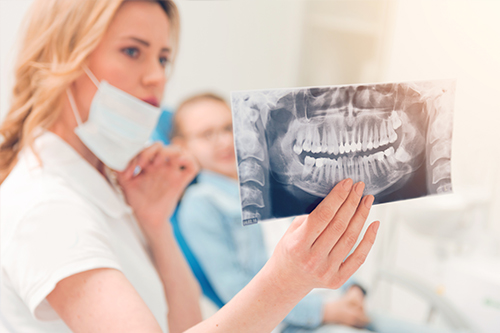
Focused Assessment: A specific exam using digital X-rays to find the source of the problem.
-
Pain Management: Immediate actions to reduce inflammation and numb the site.
-
Stabilization: Applying temporary restorations or splinting teeth to halt further damage.
-
Long-term Planning: We will discuss restorative paths—such as crowns, implants, or root canals—to be finished after the emergency phase.
We prioritize clear communication so you understand your recovery. Our team offers specific aftercare steps and follow-up visits to ensure temporary fixes transition into durable, long-term solutions.
Critical First Aid for Dental Injuries
If you are currently facing an emergency, follow these steps before arriving at our Lake Worth office:
For a Knocked-Out Tooth
-
Handle by the Crown: Do not touch the root.
-
Rinse Gently: Use only water; avoid soap or scrubbing.
-
Storage: Attempt to place the tooth back in its socket. If impossible, keep it in a container of milk or a tooth-preservation solution. Do not use plain water for extended periods.
For Pain and Swelling
-
Rinse: Use warm salt water to clear bacteria.
-
Cold Compress: Apply to the outside of the face in 15-minute intervals.
-
Medication: Use over-the-counter relievers, but never place aspirin directly on the gums.
Why Early Intervention Matters
Prompt treatment leads to:
-
Higher Success Rates: Re-implanted teeth have the best survival rate if treated within an hour.
-
Less Invasive Procedures: Early care can prevent the need for complex extractions or root canals.
-
Cost Savings: Stabilization is generally more affordable than reconstructive surgery caused by delay.
Why Choose Florida Gardens Dental Center for Your Emergency Care
At Florida Gardens Dental Center, we maintain flexibility in our daily schedule specifically for patients needing urgent clinical care. Our practice uses advanced diagnostic imaging to pinpoint the cause of your discomfort accurately.
-
Immediate Triage and Pain Relief: We focus on rapid intervention to stabilize your condition the moment you arrive.
-
Advanced In-House Technology: Precision digital X-rays ensure an accurate assessment of infection or internal damage.
-
Compassionate Care: We provide a calm environment to help manage the stress of dental trauma.
-
Seamless Transition to Restorative Care: Once stabilized, we offer comprehensive plans to fully restore your oral health.
Contact Florida Gardens Dental Center for Emergency Care
If you have a dental emergency in Lake Worth and are unsure of your next steps, contact us immediately. We prioritize urgent cases to provide the relief and ex